

Uffizi Gallery Guide for Boboli Gardens Visitors 2026
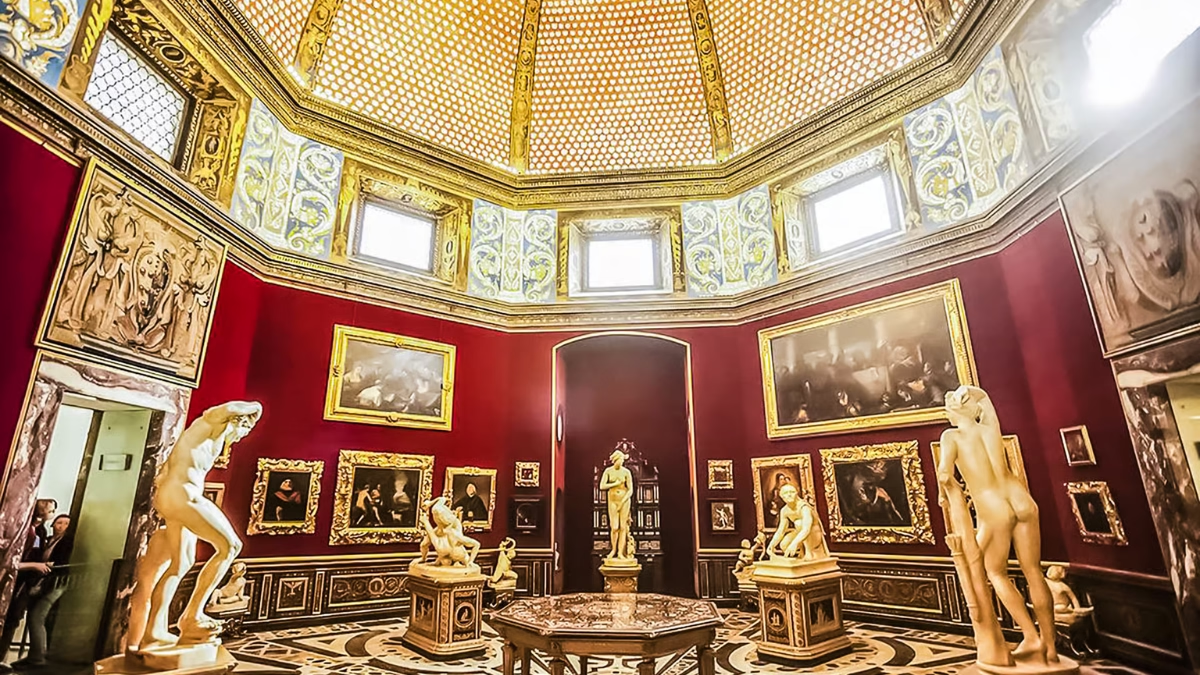
The Uffizi Gallery (Galleria degli Uffizi) is Florence’s greatest art museum, just across the Arno from Boboli Gardens and run by the same Uffizi Galleries authority. It holds Botticelli’s Birth of Venus and Primavera, works by Leonardo, Michelangelo, Raphael and Caravaggio, and connects to Pitti Palace through the historic Vasari Corridor. A combined Uffizi, Pitti and Boboli ticket lets you pair the gallery with the garden across several days.
For most travelers, Boboli Gardens and the Uffizi are two halves of the same Florentine day: one the definitive Italian garden, the other the definitive Renaissance picture gallery, separated only by the Arno and a short walk over Ponte Vecchio. They even share an owner — the Gallerie degli Uffizi manages both — which is why a single combined ticket can string them together.
But the Uffizi runs on a stricter timed-entry system than the garden, and pairing the two takes a little planning. This guide covers the gallery’s must-see masterpieces, how the combined ticket and the Vasari Corridor link it to Boboli and Pitti, and the smartest way to fit both into a trip.
Uffizi Gallery at a Glance
| Detail | Galleria degli Uffizi |
|---|---|
| Location | Piazzale degli Uffizi, across the Arno from Boboli |
| Signature works | Botticelli’s Birth of Venus and Primavera |
| Managed by | The Uffizi Galleries (same as Boboli and Pitti) |
| Entry | Strict timed, reserved slots; book ahead |
| Combined option | Uffizi + Pitti + Boboli multi-day ticket |
| Time needed | 2.5–3.5 hours |
The Masterpieces You Come For
The Uffizi’s headline works are Botticelli’s Birth of Venus and Primavera, displayed together in the famous Botticelli rooms. Beyond them are Leonardo da Vinci’s Annunciation, Michelangelo’s Doni Tondo, Raphael portraits, Titian’s Venus of Urbino and Caravaggio’s Medusa and Bacchus. The collection traces Western painting from the Gothic through the High Renaissance across a long U-shaped upper gallery.
The heart of any visit is the pair of Botticelli panels — the Birth of Venus and Primavera — which alone justify the trip and draw the densest crowds. Around them the collection reads like a roll-call of the Renaissance: Leonardo’s Annunciation, Michelangelo’s Doni Tondo in its original frame, Raphael’s portraits, and the room of Caravaggio with his shield-painted Medusa.
The building itself is part of the experience. Built by Vasari in the 16th century as the Medici administrative offices — uffizi means “offices” — its long, light-filled corridors were adapted into one of the world’s first public galleries. The top-floor windows frame views of the Arno, Ponte Vecchio and the hills of the Oltrarno, including the green rise of Boboli, tying the museum visually to the garden you may already have seen. For the wider context of Medici patronage, our guide to Boboli Gardens history covers the family that assembled both.
The Vasari Corridor Connection
The Vasari Corridor is a raised, kilometer-long passage built in 1565 that links the Uffizi to Pitti Palace, running over Ponte Vecchio and above the Oltrarno streets so the Medici could move between offices, home and garden unseen. After a long closure it reopened to visitors in 2024, on separate timed tickets, giving a historic private route from the gallery toward Pitti and Boboli.
The corridor is a remarkable survival: an elevated walkway that let the grand dukes pass from the Uffizi, across the river atop Ponte Vecchio, and into Pitti Palace without setting foot in the public streets. It physically threads the Uffizi, the palace and the garden into one grand-ducal circuit — the same connection your combined ticket recreates in modern form.
Reopened in 2024 after decades shut, the corridor is now visitable on its own separate, timed tickets, which sell out well ahead. It is not included in the standard Uffizi admission, so treat it as an optional extra rather than a given. Even if you skip it, knowing it exists explains why the Uffizi, Pitti Palace and Boboli feel like three parts of a single whole.
Pairing the Uffizi with Boboli
The Uffizi sits about a 10-to-15-minute walk from Boboli, across Ponte Vecchio and up Via de’ Guicciardini. A combined Uffizi, Pitti Palace and Boboli ticket covers all three, typically valid over three to five days, so you can see the gallery one day and the garden another. This avoids cramming the Uffizi’s timed entry and the garden’s long walk into a single exhausting afternoon.
Geographically the pairing is easy: the two are barely a river apart. The practical challenge is stamina and timing — the Uffizi is a two-to-three-hour concentration of art, and Boboli is a two-to-three-hour hilly walk, which is a great deal for one day. This is exactly what the multi-day combined ticket solves. The Uffizi, Pitti and Boboli combined ticket spreads the three sites across several days on one purchase, letting you match each to your energy and the weather.
A common rhythm is the gallery on a cooler or rainy day, when being indoors is a bonus, and the garden on a bright one, when the sculpture and views are at their best. Book the Uffizi, Pitti and Boboli pass in advance, since the Uffizi’s timed slots are the tightest of the three and fill early in peak months.
Booking and Beating the Queues
The Uffizi enforces reserved, timed entry far more strictly than Boboli, and turning up without a slot in high season can mean a very long wait or no entry at all. Book ahead, choose an early or late slot to dodge the mid-morning crush, and arrive a little before your time. Unlike the garden, where a gate ticket often works on quieter days, the Uffizi genuinely rewards advance planning.
If you are building a multi-site Florence itinerary, our guide to nearby attractions maps how the Uffizi, Ponte Vecchio, Pitti and Boboli string together across the two riverbanks. Always confirm current opening times and prices on the official Uffizi Galleries site, since the gallery adjusts its hours seasonally and for special exhibitions.
Frequently Asked Questions
Is the Uffizi Gallery included in the Boboli Gardens ticket?
No. The standard Boboli ticket covers the garden, Bardini and the Porcelain Museum only. The Uffizi is a separate museum with its own admission, though both are run by the Uffizi Galleries. To see the gallery and the garden on one purchase, choose a combined Uffizi, Pitti Palace and Boboli ticket, which is usually valid across several days.
How do you get from Boboli to the Uffizi?
It is a short walk of about 10 to 15 minutes. From Boboli’s Pitti Palace entrance, head down Via de’ Guicciardini to Ponte Vecchio, cross the Arno, and the Uffizi is just beyond on Piazzale degli Uffizi. The two sit on opposite banks of the river but are barely half a kilometer apart, making them easy to combine over a day or two.
What are the most famous works in the Uffizi?
Botticelli’s Birth of Venus and Primavera are the signature masterpieces, shown together in the Botticelli rooms. Other highlights include Leonardo da Vinci’s Annunciation, Michelangelo’s Doni Tondo, Raphael’s portraits, Titian’s Venus of Urbino and Caravaggio’s Medusa and Bacchus. The collection runs chronologically through the Gothic, early Renaissance and High Renaissance along the gallery’s long upper floor.
Can I see the Uffizi and Boboli on the same ticket?
Yes, with a combined Uffizi, Pitti Palace and Boboli ticket, which bundles all three sites into one purchase, typically valid over three to five days. It lets you see the gallery one day and the garden another rather than exhausting both in an afternoon. Buying the sites separately is possible too, but the combined ticket is more convenient and often better value for visitors doing all three.
What is the Vasari Corridor?
It is an elevated, kilometer-long passage built in 1565 linking the Uffizi to Pitti Palace across the top of Ponte Vecchio, so the Medici could travel privately between their offices, home and garden. Closed for decades, it reopened to visitors in 2024 on separate timed tickets that sell out early. It is not part of standard Uffizi admission, so book it independently if you want to walk it.
How long do you need at the Uffizi?
Allow around two and a half to three and a half hours to cover the main galleries without rushing. It is a large collection, and combined with Boboli’s two-to-three-hour walk it makes for a very full day, which is why many visitors split them across a multi-day ticket. Prioritize the Botticelli, Leonardo, Michelangelo and Raphael rooms if your time is short.
Do I need to book the Uffizi in advance?
Yes, far more so than Boboli. The Uffizi runs strict timed, reserved entry, and in peak season arriving without a slot can mean hours of queuing or being turned away. Book a specific time ahead, ideally early or late in the day to avoid the mid-morning peak. The garden is more forgiving, but the gallery genuinely requires planning.
Which should I visit first, the Uffizi or Boboli?
There is no fixed order, but many people time the Uffizi for a cooler or wet day, when being indoors is welcome, and save Boboli for fine weather, when its sculpture, fountains and views shine. If doing both in one day, the gallery in the morning and the garden in the afternoon works well — just book the Uffizi’s timed slot first and build the rest of the day around it.
