

Pitti Palace Florence — What to See & How to Visit 2026
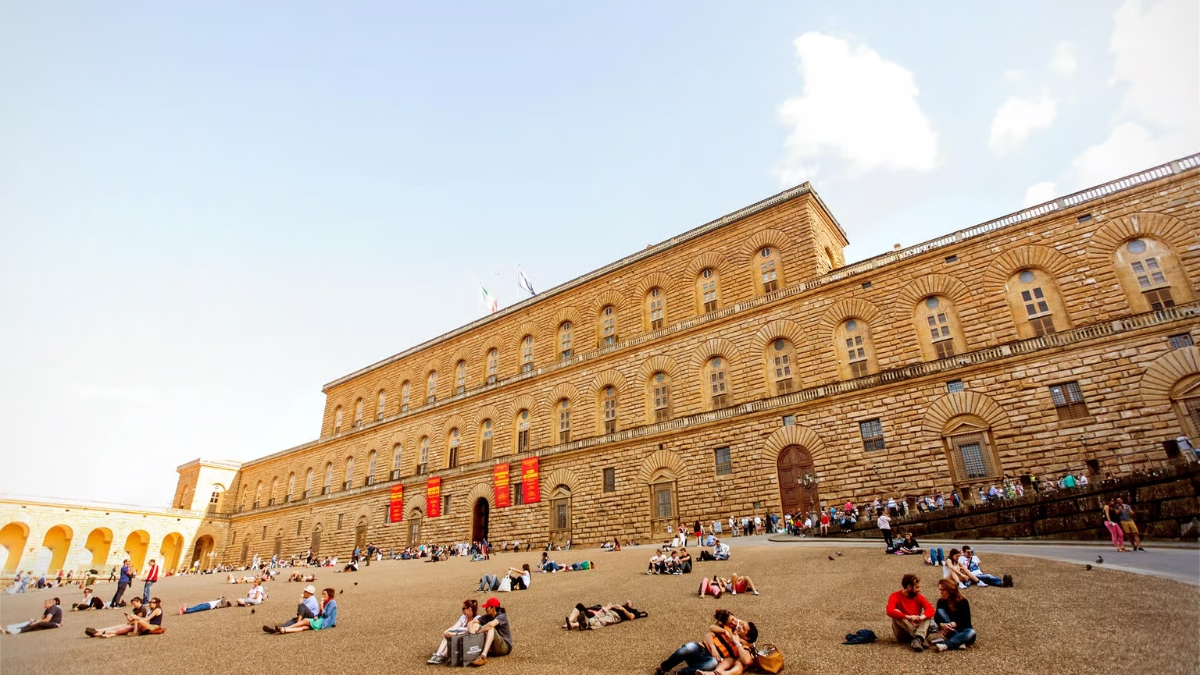
Pitti Palace (Palazzo Pitti) is the vast Renaissance palace directly in front of Boboli Gardens, once home to the Medici and later the Lorraine grand dukes and Italy’s royal family. Inside are five museums, led by the Palatine Gallery with its Raphaels and Titians, the Royal Apartments, the Gallery of Modern Art, the Treasury of the Grand Dukes and the Costume and Fashion museum. The garden opens directly from its rear courtyard.
Stand in the sloping piazza in front of Pitti Palace and it is hard to take in all at once: a rusticated stone façade stretching more than 200 meters, begun for a banker in the 15th century and swollen by the Medici into the largest palace in Florence. Behind it climbs Boboli, the garden that served as its private grounds. Together they form a single grand-ducal ensemble split into indoor and outdoor halves.
For garden visitors, the palace is the obvious companion piece — but its ticket works differently from Boboli’s, and it is easy to arrive expecting one and get the other. This guide walks through the five museums inside, what the tickets cover in 2026, and how the palace connects to the garden behind it.
Pitti Palace at a Glance
| Detail | Palazzo Pitti |
|---|---|
| Location | Piazza de’ Pitti, directly in front of Boboli Gardens |
| Museums inside | Palatine Gallery, Royal Apartments, Modern Art, Treasury, Costume & Fashion |
| Pitti ticket (2026) | Around €16 gate / €19 online |
| Combined Pitti + Boboli | Around €22 gate / €25 online, valid one day |
| Time needed | 2–3 hours for the palace alone |
The Five Museums Inside Pitti Palace
Pitti Palace houses five museums under one roof: the Palatine Gallery (grand-ducal painting collection), the adjoining Royal Apartments, the Gallery of Modern Art on the upper floor, the Treasury of the Grand Dukes (the former Silver Museum) on the ground floor, and the Museum of Costume and Fashion. A single Pitti ticket admits you to all of them, though few visitors get through every one in a day.
The undisputed highlight is the Palatine Gallery, a suite of state rooms hung floor-to-ceiling in the old manner, with the pictures arranged for effect rather than by school or date. It holds one of the world’s great concentrations of Raphael and Titian, alongside Rubens, Caravaggio, Andrea del Sarto and more — a collection assembled by the Medici and Lorraine that rivals the Uffizi in quality if not in fame. Flowing directly on from it, the Royal Apartments preserve the lavishly furnished rooms used by the grand dukes and, later, the Savoy kings.
Upstairs, the Gallery of Modern Art traces Italian painting from the late 18th century through the early 20th, including the Macchiaioli, Tuscany’s answer to the Impressionists. On the ground floor, the Treasury of the Grand Dukes displays Medici hardstone vases, jewelry, cameos and gold, while the Museum of Costume and Fashion — one of the few state fashion museums in Italy — shows historic dress and textiles. It is a lot to absorb, which is why the palace deserves its own dedicated block of time rather than a rushed add-on.
How the Palace Connects to Boboli
Boboli Gardens open directly from the rear courtyard of Pitti Palace — the Ammannati courtyard at the back of the palace leads onto the garden’s amphitheater and its rising terraces. The palace and garden were conceived as a single Medici residence, indoors and out. However, they are ticketed separately: the Boboli ticket does not admit you to the palace museums, and vice versa.
Architecturally the two are inseparable. Bartolomeo Ammannati’s grand courtyard at the heart of the palace acts as a hinge, its far side opening onto the sculpted amphitheater that forms Boboli’s first great outdoor room, climbing the hillside behind the building. From the palace windows the Medici looked out over their private garden; from the garden’s upper paths you look back down over the palace roofs to the city beyond.
The catch is the ticketing. As our Boboli entry ticket guide explains, the garden pass covers Boboli, Bardini and the Porcelain Museum but stops at the palace door — the indoor galleries need their own admission. To do both, you either buy two tickets or take one combined pass, covered below.
Pitti Palace Tickets in 2026
In 2026 a Pitti Palace ticket for its indoor museums costs around €16 at the gate or €19 booked online. A combined Pitti Palace and Boboli ticket runs about €22 at the gate or €25 online and is valid for one day, covering the palace museums plus Boboli, Bardini and the Porcelain Museum. Under-18s enter free, and the first Sunday of each month is free for all.
If your main interest is the art, the palace-only ticket makes sense. If you want the full grand-ducal experience of galleries and garden together, the combined Pitti Palace and Boboli ticket is the more economical route, since the two separate tickets bought individually cost more than the bundle. It is valid for a single day, so plan to do both in one outing rather than spreading them across a trip.
For dedicated Florence museum-goers, annual PassePartout passes also exist (around €80), giving repeated access to Pitti, the Uffizi and Boboli over several days. For most visitors, though, the choice is between the palace-only pass and the day combo. Booking a reserved Pitti and Boboli entrance online adds a timed slot and an audio guide, which is worth the small premium in peak season.
Planning Your Visit
The palace entrance is on Piazza de’ Pitti, about a 10-minute walk from Ponte Vecchio up Via de’ Guicciardini. Allow two to three hours for the interior alone if you want to see the Palatine Gallery properly, and add the garden time on top — a combined palace-and-garden day is a full one. The Palatine Gallery draws the biggest crowds mid-morning, so an early or late slot is calmer.
A sensible plan is to tackle the indoor galleries first, while you are fresh and the light in the state rooms is good, then step out into Boboli for the afternoon. If you are pairing it with the great gallery across the river, our guide to the Uffizi for Boboli visitors explains how a combined ticket links all three sites. For the garden’s own timings, check the opening hours guide before you go.
Frequently Asked Questions
Is Pitti Palace included in the Boboli Gardens ticket?
No. The standard Boboli ticket covers the garden, Bardini and the Porcelain Museum, but not the palace’s indoor museums. To visit the Palatine Gallery and the other collections you need either a Pitti Palace ticket or a combined Pitti-and-Boboli pass. The two attractions share a hillside and a history but are ticketed separately by the Uffizi Galleries.
How much is a Pitti Palace ticket in 2026?
A Pitti Palace ticket for the indoor museums costs around €16 at the gate or €19 booked online. A combined Pitti Palace and Boboli ticket is about €22 gate or €25 online, valid one day, and covers the palace plus the garden circuit. Under-18s are free, and the first Sunday of each month is free for everyone. Confirm current prices on the official Uffizi Galleries site.
What is inside Pitti Palace?
Five museums: the Palatine Gallery with its Raphaels and Titians, the adjoining Royal Apartments, the Gallery of Modern Art upstairs, the Treasury of the Grand Dukes on the ground floor, and the Museum of Costume and Fashion. A single Pitti ticket admits you to all of them. Most visitors focus on the Palatine Gallery and Royal Apartments, which together take a couple of hours.
How long does it take to visit Pitti Palace?
Allow two to three hours for the palace interior if you want to give the Palatine Gallery its due, plus more if you tour all five museums. Add the garden on top and a combined day easily fills five to six hours. If your time is limited, prioritize the Palatine Gallery and Royal Apartments, then step into Boboli through the rear courtyard.
Should I buy a combined Pitti and Boboli ticket?
If you want both the galleries and the garden, yes — the combined ticket costs less than two separate admissions and is valid for one day. Buy it only if you plan to do both in a single outing, since the one-day validity means you cannot split it across your trip. If you only care about the art, the palace-only ticket is enough.
Can I enter Boboli directly from Pitti Palace?
Yes. Boboli opens from the palace’s rear Ammannati courtyard onto the amphitheater and the rising garden terraces — the two were designed as one residence. But your ticket must cover the garden: the palace-only pass will not let you through into Boboli, and the garden pass will not admit you to the museums. A combined ticket removes the problem.
What is the most famous thing to see in Pitti Palace?
The Palatine Gallery is the star, prized for its dense concentration of Raphael and Titian masterpieces displayed in richly decorated state rooms, hung in the old picture-gallery style. Beyond the paintings, the Treasury of the Grand Dukes’ Medici gems and the Costume and Fashion museum draw their own admirers. For garden lovers, the view back over Boboli from the palace is a highlight in itself.
Is Pitti Palace worth visiting alongside Boboli?
For most visitors, yes. The palace and garden were a single Medici project, and seeing both gives the fuller picture — art and interiors indoors, sculpture and landscape outside. With a combined ticket the pairing is efficient and good value. If you have only half a day, though, either can stand alone: the garden for open-air Florence, the palace for one of Italy’s great painting collections.
