

Boboli Gardens Fountains: Neptune, Isolotto & Oceanus
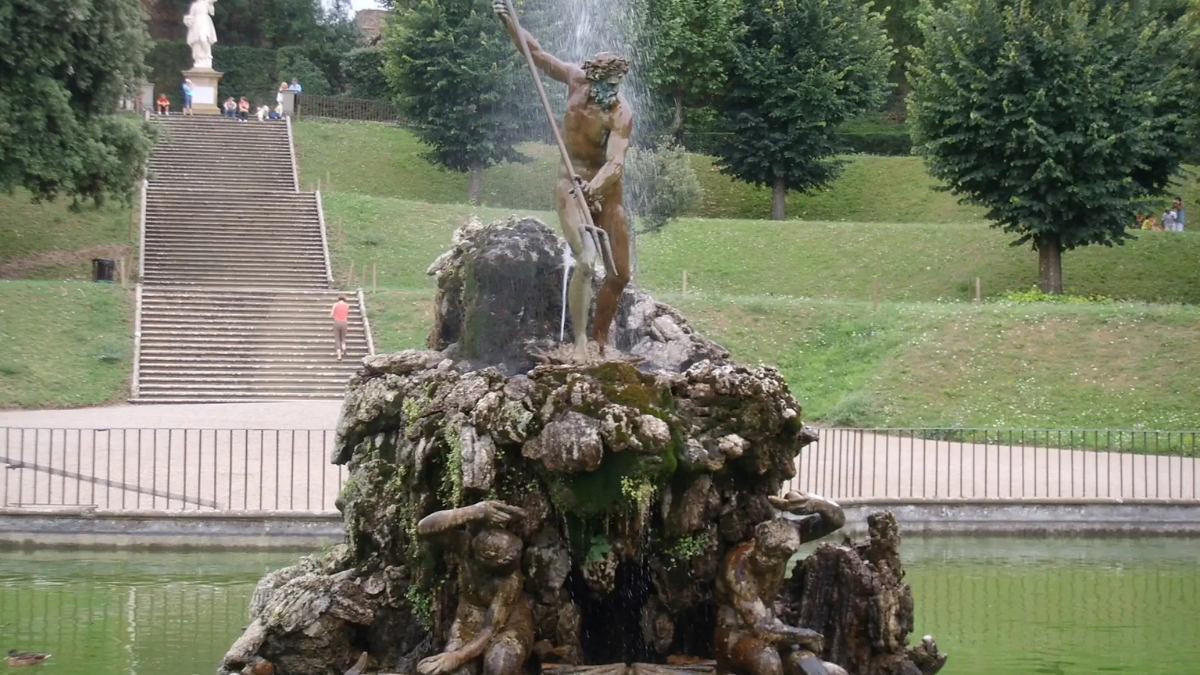
Boboli Gardens is dotted with Medici fountains, the three big draws being the Neptune Fountain (the “Fountain of the Fork,” by Stoldo Lorenzi, around 1565), the Fountain of the Artichoke on the terrace above Pitti Palace, and Giambologna’s Oceanus Fountain on the Isolotto island at the foot of the Viottolone. All were fed by a 16th-century water system drawn from the Arno and hillside springs.
Water was never decoration alone at Boboli — it was engineering and theater. When the Medici laid out the garden from 1549, moving water uphill from the Arno to feed pools, jets and grottoes was a display of power as much as taste. The result is a garden where fountains mark almost every change of level, from the Artichoke basin on the palace terrace to the great island pool far below.
This guide walks you through the main fountains and ponds in order of the usual uphill-then-downhill route, explains who made them and what they mean, and points you to the quieter waterworks most visitors miss.
Boboli Fountains at a Glance
| Fountain | Location | Maker / date |
|---|---|---|
| Fountain of the Artichoke | Terrace above Pitti Palace | Francesco Susini, 1641 |
| Neptune Fountain (“Fork”) | Hillside above the amphitheatre | Stoldo Lorenzi, c. 1565 |
| Oceanus Fountain | The Isolotto, foot of the Viottolone | Giambologna, 1570s |
| Ganymede Fountain | Near the amphitheatre level | 17th century |
The Neptune Fountain — the “Fountain of the Fork”
The Neptune Fountain sits on the hillside above the amphitheatre, where a bronze Neptune raises his trident over a rocky pool. Sculpted by Stoldo Lorenzi around 1565, it is nicknamed the “Fountain of the Fork” (Fontana della Forcone) after the three-pronged trident. It is the garden’s most photographed fountain, backed by the climb toward the Kaffeehaus and Forte Belvedere.
Climb the axis above the amphitheatre and you reach a broad pool where a muscular bronze Neptune stands over tritons and sea creatures, trident raised. Florentines have long called it the Fontana della Forcone, the “Fountain of the Fork,” a nod to the pronged trident that reads more like a pitchfork from below. Stoldo Lorenzi cast it in the 1560s, and it remains the pin most visitors drop when they picture Boboli’s waterworks.
The setting does much of the work. The fountain marks a landing on the main uphill spine of the garden, so you meet it as a reward after the amphitheatre and before the final climb to the Porcelain Museum. Pause here and look back down: the pool frames the amphitheatre, its Egyptian obelisk and, beyond, the roofline of Pitti Palace.
The Isolotto and Giambologna’s Oceanus Fountain
The Isolotto is an oval island set in a large pond at the low end of the garden, reached by walking down the Viottolone cypress avenue. At its center rises the Oceanus Fountain, designed by Giambologna in the 1570s: a colossal figure of Oceanus over three river gods representing the Nile, Ganges and Euphrates. The figure in the garden is a copy; the original is in the Bargello museum.
If the Neptune Fountain is Boboli’s high point, the Isolotto is its grand finale. Follow the Viottolone down the garden’s second axis and it opens onto a moated oval island ringed by potted citrus, statues and a stone balustrade. At the heart stands the Oceanus Fountain, Giambologna’s masterpiece of the 1570s, where a giant sea god presides over three reclining river gods — the Nile, the Ganges and the Euphrates — each pouring water into the great basin.
The Oceanus you see on the island is a weather-proof copy; the marble original was moved indoors to the Bargello to protect it, a common fate for Boboli’s finest carvings. The island’s water is the point, though. Ringed by its pond, the Isolotto turns Giambologna’s group into a stage set that only makes full sense once you have descended to meet it at the bottom of the hill.
The Fountain of the Artichoke
The first fountain most visitors meet is the Fontana del Carciofo, the Fountain of the Artichoke, on the terrace directly above Pitti Palace’s courtyard. Francesco Susini completed it in 1641, and its nickname comes from the artichoke-shaped bronze crown that once topped the upper basin. Framed by the palace facade behind and the amphitheatre above, it is the fountain you pass as you first climb into the garden from the Pitti Palace entrance.
The Artichoke is a courtly, architectural fountain rather than a mythological set piece, with tiered basins and jets that catch the light on the terrace. It rewards a look back down over the palace roof and, on a clear day, across the Florence skyline, so it works as both an opening flourish and a viewpoint.
Ganymede, Grottoes and the Quieter Waterworks
Beyond the three headline fountains, water threads through the whole garden. Near the amphitheatre level you can find the small Ganymede Fountain, its figure caught mid-abduction by Jupiter’s eagle, a 17th-century echo of the mythological themes that run through Boboli’s sculpture. Water also animates the Buontalenti Grotto, where dripping stalactite-like walls and hidden basins once produced surprising effects for Medici guests.
All of it depended on a serious feat of hydraulic engineering. To feed pools set high above the river, the Medici drew water from the Arno and from hillside sources and channeled it through the garden by gravity, a system refined across the 16th and 17th centuries. That plumbing is the invisible thread linking every basin, and understanding it turns a walk between fountains into a tour of Renaissance ambition — a story told in full in our garden history guide.
How to See the Fountains on One Visit
The fountains are spread across Boboli’s full height, so seeing all the main ones means walking the garden top to bottom. From the Pitti entrance you meet the Artichoke first, climb past the amphitheatre to the Neptune Fountain, then cut across to the Viottolone and descend to the Isolotto and the Oceanus Fountain at the low end. Allow two to three hours for the loop, more if you add the Bardini side; our guide on how long to spend breaks it down by pace.
Timing matters for photographs. Water and low light flatter the fountains most in the early morning after the 8:15 AM opening or in the last hours before closing, when the crowds thin and the jets catch a warmer sun. For the seasonal timings and the closed first-and-last Mondays, check our opening hours guide before you set out.
Frequently Asked Questions
What is the most famous fountain in Boboli Gardens?
The Neptune Fountain is the best known, a bronze sea god raising his trident over a hillside pool above the amphitheatre. Sculpted by Stoldo Lorenzi around 1565, it is nicknamed the “Fountain of the Fork” after the trident. Close behind it in fame is Giambologna’s Oceanus Fountain on the Isolotto, at the low end of the garden.
Why is it called the Fountain of the Fork?
Florentines nickname the Neptune Fountain the Fontana della Forcone, or “Fountain of the Fork,” because Neptune’s three-pronged trident looks like a pitchfork when seen from below. The name has stuck for centuries and is often how locals refer to it, even though the figure is properly the sea god Neptune.
Who made the Oceanus Fountain on the Isolotto?
The Oceanus Fountain was designed by Giambologna in the 1570s, showing a colossal Oceanus above three river gods representing the Nile, Ganges and Euphrates. The version standing on the Isolotto is a copy; the marble original was moved to the Bargello museum to protect it from the weather.
Where is the Isolotto in Boboli Gardens?
The Isolotto is an oval island in a large pond at the low end of the garden, reached by walking down the Viottolone cypress avenue from the upper garden. It is one of the furthest points from the Pitti Palace entrance, so plan to walk down to it and back up, or exit toward Porta Romana nearby.
Do the fountains still run with water?
Yes, the main fountains are working features, though flow can be reduced or paused for maintenance and during dry spells. The Medici built an elaborate gravity-fed system drawing on the Arno and hillside springs to supply them. On a normal open day you can expect to see the Neptune, Artichoke and Oceanus fountains playing.
Are the fountain statues original?
Several of the finest figures you see outdoors are weather-resistant copies, with the marble originals moved to museums for protection — Giambologna’s Oceanus original is in the Bargello, for example. This is common across the garden’s sculpture, which functions as an open-air museum. Our sculptures guide explains which works are copies and where the originals now live.
How long does it take to see all the fountains?
Seeing the Artichoke, Neptune and Oceanus fountains means walking the garden top to bottom, which takes around two to three hours at a relaxed pace including the amphitheatre and grotto. The fountains sit at very different levels, so the walk involves climbs and gravel paths; wear comfortable shoes and carry water in summer.
Is there a fountain near the Buontalenti Grotto?
Water features cluster around the lower garden near the grotto, and the grotto itself once used dripping water and hidden basins for dramatic effect. From the Buontalenti Grotto it is a short walk to the Artichoke Fountain on the palace terrace, making the two easy to combine early in a visit before you climb higher.
Do I need a ticket to see the fountains?
Yes, the fountains are inside the paid garden, so you need a Boboli ticket, which also covers the Bardini Gardens and Porcelain Museum. A reserved entry ticket costs €10 at the gate or €13 online in 2026, with under-18s free and the first Sunday of each month free for everyone.
