

Boboli Gardens Amphitheatre — History, Obelisk & Tips
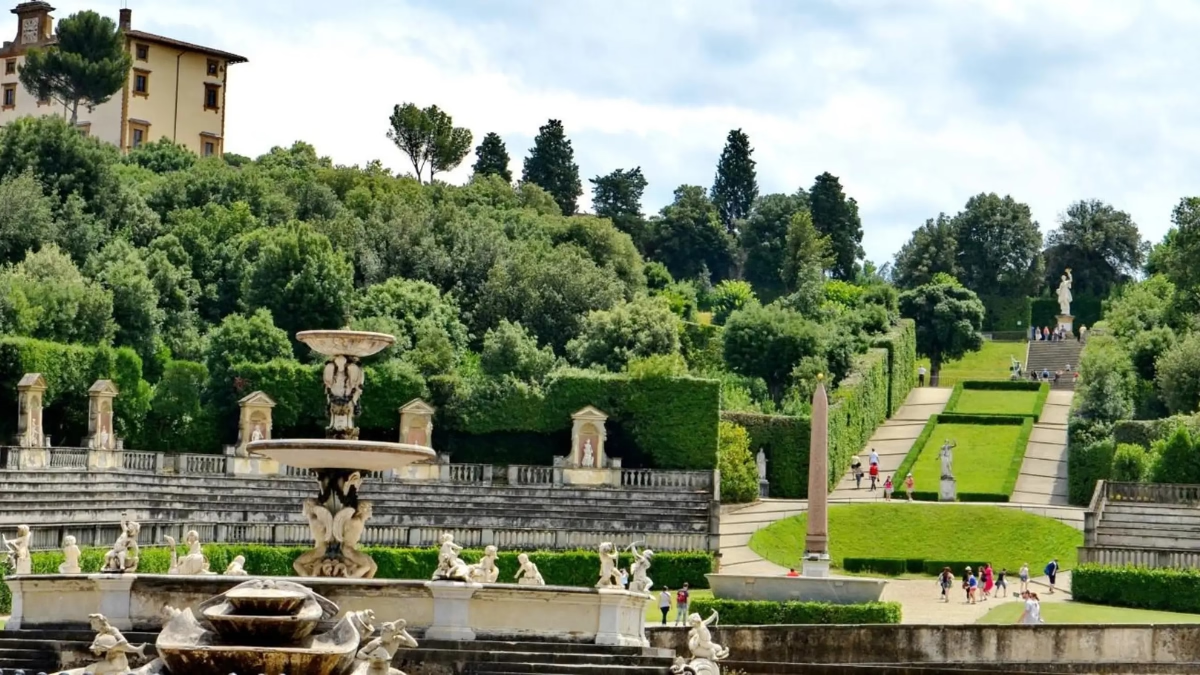
The Amphitheatre at Boboli Gardens is a horseshoe-shaped, tiered garden theater on the hillside directly behind Pitti Palace. Shaped from a former stone quarry, it staged early Medici spectacles and opera. At its center stand an ancient Egyptian obelisk brought from the Villa Medici in Rome and a large Roman granite basin. It is one of the first features you reach on the climb from the palace.
Stand in the courtyard of Pitti Palace, look up the hill, and the green bowl carved into the slope above you is the Amphitheatre — the ceremonial heart of Boboli Gardens. It is not a Roman ruin, though it borrows the form of one. This is a Renaissance garden theater, built by the Medici as a stage for spectacle, and later crowned with genuine antiquities: an Egyptian obelisk thousands of years old and a colossal Roman basin.
This guide covers the amphitheater’s origins as a quarry, its role as a Medici theater for early opera and pageantry, the obelisk and granite basin at its center, its layout, and how to take it in on your visit in 2026.
The Amphitheatre at a Glance
| Detail | Boboli Amphitheatre |
|---|---|
| Form | Horseshoe-shaped tiered garden theater |
| Location | Hillside directly behind Pitti Palace |
| Origin | Former stone quarry, then Medici theater |
| Centerpiece | Ancient Egyptian obelisk + Roman granite basin |
| Obelisk origin | Brought from the Villa Medici in Rome |
| Best paired with | The Buontalenti Grotto and Neptune Fountain nearby |
Where the Amphitheatre Is
The Amphitheatre lies on the central axis of the garden, rising immediately behind Pitti Palace so that it reads as a continuation of the building itself. From the palace courtyard your eye travels straight up the slope into the theater’s bowl and on toward the Neptune Fountain higher up. That deliberate line — palace, theater, fountain, hilltop — is the spine of the whole Boboli garden design.
Because it sits so close to the main entrance, the amphitheater is one of the first major features visitors reach, usually within a few minutes of the ticket gate. It makes a natural first stop before you climb higher or branch off toward the grotto.
From Quarry to Medici Theater
The amphitheater began as a working stone quarry that supplied the pietra forte used to build Pitti Palace. Once the stone was extracted, the resulting hollow in the hillside was reshaped into a formal, horseshoe-shaped garden theater in the 16th and 17th centuries. The Medici used it to stage lavish spectacles, pageants and some of the earliest operatic performances.
There is a neat logic to the amphitheater’s origin. The very stone that built Pitti Palace — the honey-colored pietra forte — was quarried from this hillside, and the excavation left a natural hollow directly behind the palace. Rather than fill it, the Medici turned it into an asset, shaping the depression into a tiered, horseshoe-shaped theater that opens toward the palace.
Over the 16th and 17th centuries this became the garden’s great stage. The Medici mounted elaborate court spectacles here — pageants, mock battles, music and some of the earliest opera performances, in the decades when the form itself was being invented in Florence. With the palace facade as a backdrop and the tiered slopes as seating, the amphitheater let the family put on displays of wealth and culture for invited guests. It remains, in effect, an open-air stage set in stone and greenery.
The Egyptian Obelisk
At the center of the amphitheater stands a genuine ancient Egyptian obelisk. It was brought to Boboli from the Villa Medici in Rome, part of the family’s habit of transferring prized antiquities to Florence. The obelisk gives the garden theater a monumental focal point and links the Medici’s Renaissance stage to the deep antiquity they admired and collected.
The obelisk is the amphitheater’s exclamation point. A real ancient Egyptian monument, it was moved from the Medici’s villa in Rome to Boboli, where it was set up as the centerpiece of the theater. For the Medici, displaying such a trophy was a statement: it tied their dynasty to the grandeur of Egypt and Rome and gave the garden a vertical accent visible from across the slope.
Antiquities like this were part of how the Medici turned Boboli into an open-air museum. The obelisk sits among the garden’s wider collection of classical and Renaissance sculptures, but as the tallest single object on the central axis it is the one that defines the theater’s silhouette.
The Roman Granite Basin
Set at the foot of the obelisk is a colossal basin of Roman granite — an enormous single bowl of stone that once served in the ancient Roman baths and was later brought to Boboli. Its sheer scale is part of the point: like the obelisk above it, the basin is a genuine antiquity repurposed to lend the Medici theater the weight of the classical past.
Together, the towering obelisk and the massive basin form a single monumental group at the center of the amphitheater’s floor. They anchor the whole space and give the tiered slopes something to face, completing the transformation of a former quarry into a stage worthy of a grand-ducal court.
The Layout
The amphitheater is laid out as a horseshoe, its rounded end running up the hillside and its open side facing down toward Pitti Palace. Rising tiers of grass and stone step up the slope like the seating of a Roman theater, decorated at intervals with statues and terracotta urns set into niches around the curve. The design is symmetrical and axial, in keeping with the rest of the formal garden.
From the upper tiers you get one of the best framed views back over Pitti Palace and out toward the city — a reminder that the theater was designed to be looked at from the palace and to look back at it. From here the route continues uphill past the Neptune Fountain, so the amphitheater works well as the pivot of a visit rather than an end point. The nearby Buontalenti Grotto is only a short detour away.
Visiting Tips
Because the amphitheater is open, tiered and largely unshaded, it can be hot in the middle of a summer day — the same exposure that affects much of Boboli. Aim for the 8:15 AM opening or the late afternoon, both for cooler air and for softer light on the palace facade behind you. Bring water and sun protection, and wear shoes suited to gravel and slopes.
The amphitheater is included in any Boboli Gardens entry ticket, and since it sits right at the start of the climb it costs you no extra walking. Signage in the garden is sparse, so a self-guided audio commentary helps make sense of the obelisk and basin; for the wider timing question, see our guide to the best time to visit.
Frequently Asked Questions
What is the Amphitheatre at Boboli Gardens?
It is a horseshoe-shaped garden theater set into the hillside directly behind Pitti Palace. Built by the Medici from a former stone quarry, it staged court spectacles, pageants and early opera. At its center stand an ancient Egyptian obelisk and a colossal Roman granite basin. Despite resembling a Roman theater, it is a Renaissance creation, and it forms the ceremonial heart of the garden.
Why is there an Egyptian obelisk at Boboli?
The obelisk is a genuine ancient Egyptian monument that the Medici brought to Boboli from their Villa Medici in Rome. Transferring prized antiquities to Florence was part of how the family displayed their wealth and cultural ambition. Placed at the center of the amphitheater, the obelisk gives the garden theater a monumental focal point and connects the Medici’s Renaissance stage to the deep antiquity they collected and admired.
Was the amphitheater really a quarry?
Yes. The hollow it occupies was originally a working quarry that supplied the pietra forte stone used to build Pitti Palace. Once the stone had been extracted, the Medici reshaped the resulting depression in the hillside into a formal tiered theater rather than filling it in. It is a striking example of turning an industrial scar into a centerpiece of garden design.
What performances were held there?
The Medici used the amphitheater for elaborate court entertainments — pageants, music, mock spectacles and some of the earliest operatic performances, staged in the period when opera was being born in Florence. With the palace as a backdrop and tiered slopes for seating, it was a purpose-built stage for displaying the family’s culture and status to invited audiences.
What is the large basin in the amphitheater?
At the foot of the obelisk sits a huge Roman granite basin, a single enormous bowl of stone that originally came from the ancient Roman baths and was later brought to Boboli. Together with the obelisk it forms a monumental group at the center of the theater floor. Like the obelisk, it is a real antiquity repurposed to give the Medici theater the authority of the classical past.
Where is the amphitheater in the garden?
It lies on the garden’s central axis, rising immediately behind Pitti Palace, so it is one of the first major features you reach after entering through the main Pitti courtyard entrance. From the palace your eye runs straight up into the theater and on toward the Neptune Fountain higher up the slope. The Buontalenti Grotto is a short walk to the side.
Is the amphitheater included in the Boboli ticket?
Yes. The Amphitheatre is part of Boboli Gardens and is covered by any standard garden ticket, with no separate charge. Because it sits at the start of the climb from Pitti Palace, it costs no extra walking to reach. The same ticket also covers the rest of the garden, the Bardini Gardens and the Porcelain Museum, though not the indoor galleries of Pitti Palace.
When is the best time to see it?
Early morning at the 8:15 AM opening or the late afternoon are best, both for cooler temperatures and for good light on the palace facade behind the theater. The amphitheater is open and largely unshaded, so it gets hot at midday in summer. Since it is one of the first features you reach, starting your visit here works well — our guide on how long to spend helps you plan the rest.
