

Bardini Gardens Florence — 2026 Guide, Tickets & Tips
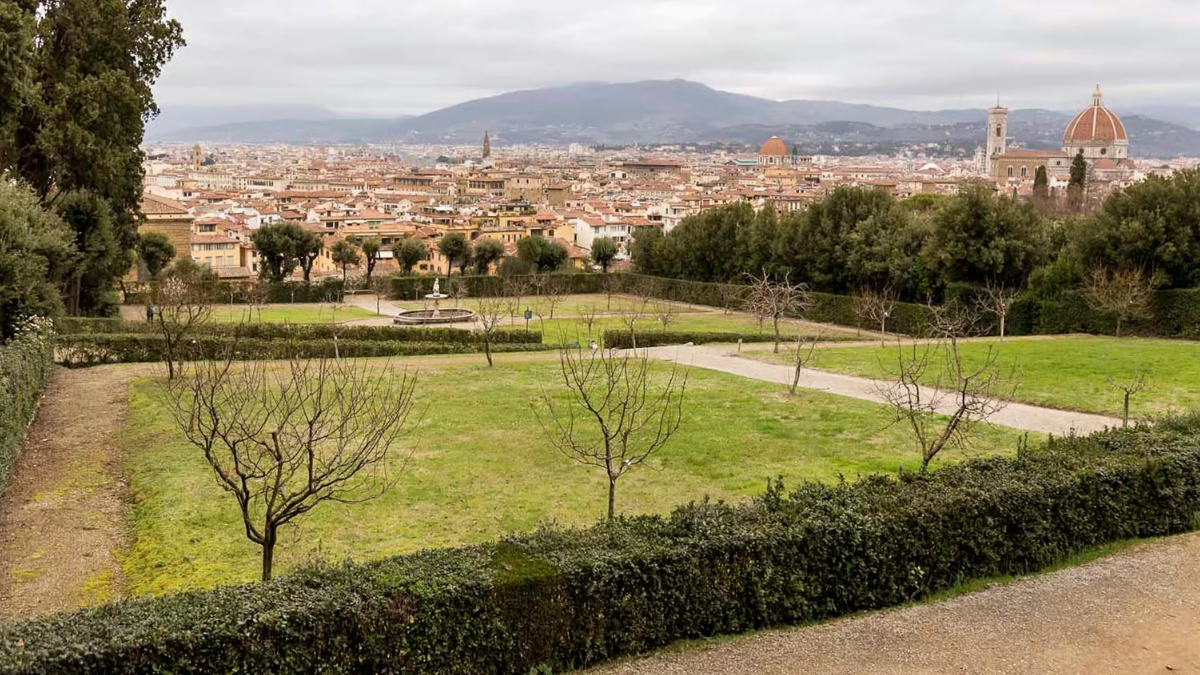
The Bardini Gardens (Giardino Bardini) are a small, steeply terraced garden on the Oltrarno hillside, just east of Boboli. They are best known for a violet wisteria pergola that blooms in April, a grand Baroque mosaic staircase, and one of the finest panoramic terraces over the Florence skyline. Entry is included on the standard Boboli Gardens ticket, so many visitors combine the two in a single day.
If Boboli is the grand Renaissance garden, Bardini is its intimate, romantic neighbor. Covering only about four hectares against Boboli’s sprawling forty-five, it packs a Baroque staircase, an English wood, an orchard and a wisteria tunnel into a compact hillside, all crowned by a belvedere terrace that frames the Duomo and the whole city below.
Because the two gardens share a ticket, Bardini is one of the easiest and best-value additions to a Boboli visit — yet it stays far quieter, since many day-trippers never realize it is included. This guide covers what to see, when the wisteria peaks, the villa and its museums, and exactly how to fold Bardini into a Boboli day.
Bardini Gardens at a Glance
| Detail | Giardino Bardini |
|---|---|
| Size | About 4 hectares (much smaller than Boboli) |
| Included on | The Boboli Gardens ticket circuit |
| Signature sights | Wisteria pergola, Baroque staircase, city-view terrace |
| Best bloom | Wisteria in April; irises and roses in May |
| Villa museums | Annigoni collection and Capucci fashion archive |
| Time needed | 1–1.5 hours |
What Makes Bardini Special
Bardini’s highlights are its Baroque staircase — a monumental mosaic-and-terracotta stairway climbing the slope — the wisteria pergola that turns violet each April, and a panoramic terrace with an unobstructed view of Florence’s Duomo and rooftops. Add an English-style wood, a canal garden and a fruit orchard, and a small garden delivers a surprising variety in an hour or so.
The centerpiece is the Baroque staircase, a grand ceremonial flight rising through six terraces, decorated with mosaics, statues and a cascade, that gives the modest garden real theatrical drama. Climbing it leads you up to the belvedere and the loggia, where the reward is the view: the whole city laid out below, from the Duomo’s dome to the tower of Palazzo Vecchio, framed by the garden’s foreground.
Then there is the wisteria. A long pergola tunnel drips with violet blossom in April, and for those few weeks it becomes one of the most photographed spots in Florence. Around it, the garden shifts character as you explore — a formal Italian section near the villa, a shadier English wood, a canal garden and an orchard of heritage fruit trees. It rewards slow wandering in a way its famous neighbor, with its long axial cypress avenue, does not.
The Wisteria Pergola and When to Visit
The Bardini wisteria pergola blooms for roughly two to three weeks from early to mid-April, weather depending, when the whole tunnel turns violet. It is the garden’s single busiest and most photographed moment. May brings irises, roses and the garden’s flowering borders, so late spring overall is the peak season for color. Bloom timing shifts year to year, so check recent reports before planning around it.
If you are visiting specifically for the wisteria, aim for April and go early in the day — the tunnel is narrow, and mid-morning brings a steady stream of photographers. The blossom is fleeting, and an early warm spell or a cold snap can move the peak by a week or more in either direction. Because the timing is never guaranteed, treat the wisteria as a wonderful bonus rather than a fixed appointment.
Beyond April, Bardini stays lovely through May’s irises and roses and into the calmer greens of summer, when its shadier corners and terrace breezes make it more comfortable than Boboli’s exposed hillside. For a season-by-season view across both gardens, see our guide to the best time to visit.
The Villa Bardini and Its Museums
At the top of the garden stands the Villa Bardini, a restored 17th-century house that today serves as an exhibition space and small museum complex. It holds the Pietro Annigoni museum, dedicated to the 20th-century portrait painter, and the archive of couturier Roberto Capucci, along with a rotating program of temporary art and photography exhibitions. The villa’s loggia and rooftop terrace also offer their own elevated take on the city view.
Access to the villa’s exhibitions is sometimes ticketed separately from the garden, since the temporary shows are run independently, so check what is on and whether it is included when you arrive. Even without going inside, the villa’s terrace and the café beside it make a pleasant pause. The whole ensemble has a more domestic, lived-in feel than the grand state rooms you would find across the river at Pitti Palace.
How to Combine Bardini with Boboli
Bardini is included on the standard Boboli ticket, so no second purchase is needed for the gardens. The two are not directly connected inside — you exit Boboli and walk about 10 minutes along Costa San Giorgio or Via de’ Bardi to reach Bardini’s entrance. Doing both in one visit takes roughly half a day and is the way most people see Bardini.
The practical point is that Bardini and Boboli, though neighbors on the same hill, do not share an internal gate. You leave Boboli, typically by the Annalena or Forte di Belvedere exit, and walk a short, steep stretch to Bardini’s entrance on Via de’ Bardi or Costa San Giorgio. It is a 10-to-15-minute walk with some climbing, so wear comfortable shoes.
In 2026 the standard Boboli Gardens ticket — around €10 at the gate or €13 online — covers both gardens plus the Porcelain Museum, and the ticket is valid for the day. During Bardini’s peak-bloom season a dedicated Boboli-plus-Bardini combination (around €15) is sometimes sold from March; the dates vary, so confirm on the official Uffizi Galleries site. Either way, once you hold a valid reserved entry ticket you can visit both on the same day.
Getting to the Bardini Entrance
Bardini’s main entrance is at Via de’ Bardi 1r, close to the river below Costa San Giorgio, with a second entrance higher up the hill on Costa San Giorgio itself. From Ponte Vecchio it is about a 10-minute walk east along the Oltrarno riverbank. If you are coming straight from Boboli, the uphill Forte Belvedere route links the two gardens along the old city walls with fine views on the way.
Because the garden climbs steeply, the terrain inside is demanding, with steps and slopes throughout — worth knowing if mobility is a concern. Our guide to reaching the area, how to get to Boboli Gardens, covers the Oltrarno approaches and bus links that serve both gardens.
Frequently Asked Questions
Are the Bardini Gardens included in the Boboli ticket?
Yes. The standard Boboli Gardens ticket covers Bardini as part of its combined circuit, along with the Porcelain Museum, at no extra charge. In 2026 that ticket costs around €10 at the gate or €13 online, valid for the day. The two gardens are not internally connected, so you exit Boboli and walk about 10 minutes to reach Bardini’s separate entrance.
When does the Bardini wisteria bloom?
The wisteria pergola typically flowers for two to three weeks from early to mid-April, though the exact peak shifts with the weather each year. It is the garden’s busiest moment, so arrive early in the day for the tunnel. May adds irises and roses, making late spring the overall high point for color. Check recent bloom reports before planning a trip around it.
How long do you need at Bardini Gardens?
Allow about an hour to an hour and a half to walk the Baroque staircase, the wisteria pergola, the terraces and the wood, plus more if you visit the Villa Bardini exhibitions. It is far smaller than Boboli, so it fits comfortably into the same day. Combining both gardens with the short walk between them takes roughly half a day.
How do you get from Boboli to Bardini?
The two gardens sit on the same hill but have no shared internal gate. You leave Boboli — usually via the Annalena or Forte di Belvedere exit — and walk about 10 to 15 minutes along Costa San Giorgio or Via de’ Bardi to Bardini’s entrance. The route involves some climbing, so wear comfortable shoes. The Forte Belvedere path offers good views along the way.
Is the Villa Bardini included with the garden ticket?
The garden itself is covered by the Boboli ticket, but the Villa Bardini’s exhibitions — including the Annigoni museum, the Capucci archive and temporary art shows — are often ticketed separately, since they are run independently. Check what is showing and whether it is included when you arrive. The villa’s terrace and café can be enjoyed without entering the exhibition rooms.
Is Bardini worth visiting compared with Boboli?
They complement each other. Boboli is the vast, monumental Medici garden of grottoes and fountains; Bardini is intimate, romantic and quieter, with a Baroque staircase and arguably a better single panoramic view of the Duomo. Since Bardini is included on the same ticket and only a short walk away, there is little reason not to see both when time allows.
Does Bardini have good views of Florence?
Yes — its belvedere terrace and loggia give one of the most complete panoramas of the Florence skyline, taking in the Duomo, Palazzo Vecchio’s tower and the rooftops of the historic center. The garden’s steep terracing means the view opens up as you climb the staircase. It rivals, and for the Duomo arguably beats, the higher outlooks within Boboli itself.
Is Bardini accessible for wheelchairs or strollers?
Not easily. The garden climbs a steep slope with steps, ramps and gravel throughout, which makes it difficult for wheelchairs and hard work with a stroller. The Baroque staircase in particular is a long flight of steps. Visitors with mobility needs should review our Boboli accessibility guide, which covers the challenging terrain across both hillside gardens.
