

Boboli Gardens Viottolone: The Cypress Avenue Walk
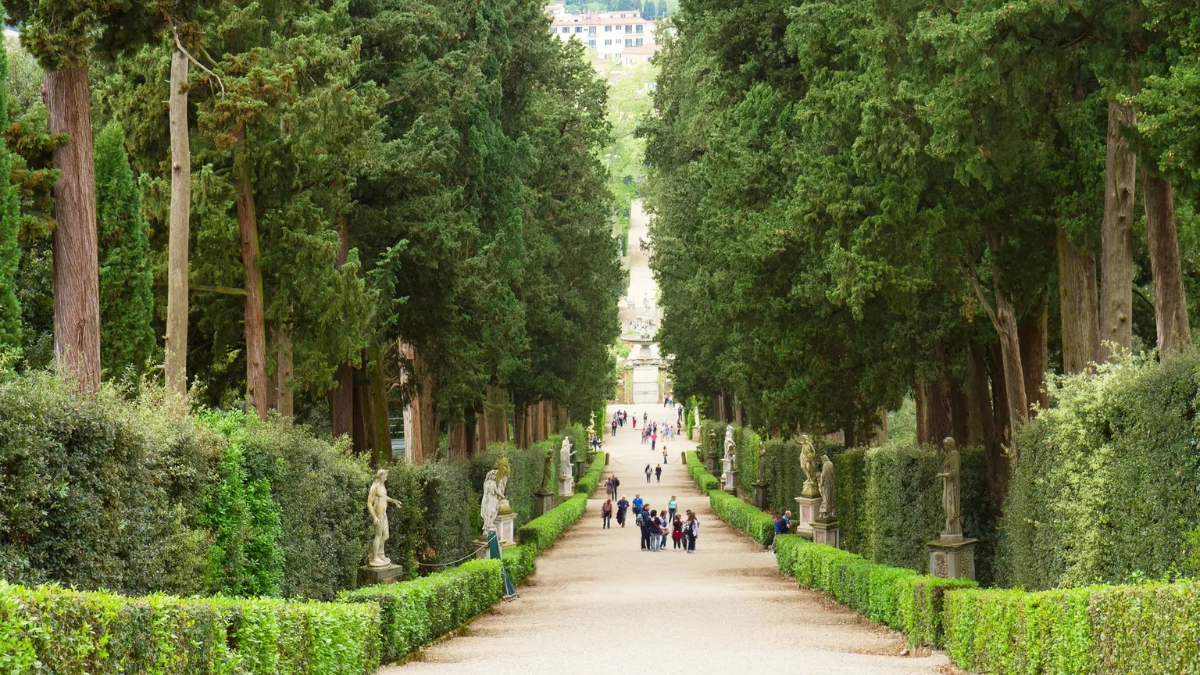
The Viottolone is Boboli Gardens’ great cypress avenue, a steep, statue-lined walk forming the garden’s secondary axis. Laid out in the 17th century, its double rows of tall cypresses descend from the upper garden to the Isolotto and its Oceanus Fountain at the low end. Walking it takes around 15 to 20 minutes downhill, longer back up, and it is at its best in low morning or late-afternoon light.
Most of Boboli climbs; the Viottolone plunges. This broad avenue of cypresses is the garden’s grand diagonal, a long, straight descent that pulls you away from the crowds near Pitti Palace and down toward the island pool at the bottom of the hill. It is the closest Boboli comes to a classic Italian garden vista — a corridor of dark trees framing a distant fountain — and one of the most rewarding walks in Florence.
This guide covers what the Viottolone is, how it fits the garden’s design, what it feels like to walk in each direction, the statues along it, and the light and timing that make it worth the effort.
What Is the Viottolone?
The Viottolone (from the Italian for “big lane”) is Boboli’s principal cypress avenue, a broad, straight, downhill path lined with double rows of tall cypress trees and flanked by statues. It forms the garden’s secondary axis, running at an angle to the main uphill spine behind Pitti Palace, and it leads down to the Isolotto island and its Oceanus Fountain at the garden’s low end.
The name simply means “big lane,” and the scale earns it. The Viottolone is wide enough to feel like an avenue rather than a path, its cypresses planted in ranks to form a shaded green corridor. Statues stand between the trees at intervals, so the walk unfolds as a sequence of framed figures rather than an empty stretch of gravel.
It was laid out in the 17th century as the garden expanded beyond its original core, extending Boboli down the slope toward Porta Romana. That expansion gave the garden a second, longer axis crossing the earlier uphill line from the palace, and the Viottolone is its spine. Understanding that two-axis layout is the key to reading Boboli as a whole, a story told in our garden history guide.
The Garden’s Second Axis
Boboli is built on two crossing lines. The first climbs from Pitti Palace up past the amphitheatre and the Neptune Fountain toward the Porcelain Museum at the top. The second, the Viottolone, cuts down the slope from the upper garden to the Isolotto far below. Where they meet, the garden pivots, and the Viottolone takes over as the dominant view.
That geometry is what makes the avenue feel so deliberate. Standing at the top of the Viottolone, the ranks of cypresses draw your eye straight down to the distant island pool, a designed vista meant to reward the descent. It is Boboli’s grandest single perspective and the moment the garden most clearly announces itself as a work of Italian Renaissance and Baroque design.
Walking the Viottolone
Walking down the Viottolone takes roughly 15 to 20 minutes at a relaxed pace, dropping steadily on a gravel surface toward the Isolotto. The return climb is steeper going and takes longer, so many visitors descend the avenue and then leave by the nearby Porta Romana or Annalena exit rather than walking back up. Wear sturdy shoes and carry water in summer.
The descent is the easy, pleasant direction. You leave the busier upper terraces, the crowd thins, and the avenue opens ahead of you between the cypresses. The surface is gravel and the gradient is real — this is a genuine hillside — so the walk down is steady rather than strenuous, and the statues give you natural reasons to pause.
The climb back is the catch. Returning up the Viottolone to Pitti Palace is a sustained uphill on loose gravel, hard work in summer heat on an avenue with limited shade at midday. Many visitors plan a one-way route: descend the Viottolone to the Isolotto, then exit via the nearby Porta Romana or Annalena gate instead of retracing the climb. Our guide on how to get to Boboli Gardens covers those entrances and the transport around Porta Romana.
The Statues Along the Avenue
The Viottolone is one of Boboli’s richest stretches of sculpture. Double rows of statues line the avenue between the cypresses — a mix of restored antique figures and later works — spaced so they scroll past as you walk. Because the avenue is quieter than the terraces near the palace, it is one of the best places in the garden to actually study individual pieces without a crowd around them.
At the foot of the avenue the sculpture builds to a climax: the Isolotto, an oval island in a large pond, crowned by Giambologna’s Oceanus Fountain with its three river gods. The whole descent is arranged to deliver you to this set piece, which only makes full sense once you have walked down to meet it. For the wider collection, see our sculptures guide, and for the island’s waterworks our fountains guide.
Best Light and Timing
The Viottolone photographs best when the sun is low. In the early morning after the 8:15 AM opening, or in the last hours before closing, light rakes down the avenue between the cypresses and lengthens their shadows across the gravel, giving the long perspective its depth. Midday sun flattens the view and leaves the exposed avenue hot and glaring, so the shoulders of the day are worth targeting.
Early is also quietest. Reaching the top of the Viottolone soon after opening often means having the great vista almost to yourself before tour groups arrive from the palace. For seasonal opening times and the closed first-and-last Mondays, check our opening hours guide, and for the coolest, clearest conditions overall see our best time to visit guide.
Frequently Asked Questions
What is the Viottolone in Boboli Gardens?
The Viottolone is Boboli’s great cypress avenue, a broad, straight, downhill path lined with double rows of tall cypress trees and flanked by statues. It forms the garden’s secondary axis, running at an angle to the main uphill spine behind Pitti Palace, and descends to the Isolotto island and its Oceanus Fountain at the garden’s low end.
How long does it take to walk the Viottolone?
Walking down the avenue takes roughly 15 to 20 minutes at a relaxed pace, pausing at the statues along the way. The return climb is steeper and takes longer, which is why many visitors descend the Viottolone and then leave by the nearby Porta Romana or Annalena exit rather than walking back up the hill.
Is the Viottolone steep?
Yes, it is a genuine hillside descent on a gravel surface, so the downhill walk is steady and the uphill return is real work, especially in summer heat with limited midday shade. Wear sturdy, comfortable shoes and carry water. Visitors who find the climb difficult often plan a one-way route down and out through a lower gate.
Where does the Viottolone lead?
The avenue leads down to the Isolotto, an oval island set in a large pond at the low end of the garden. At its center stands Giambologna’s Oceanus Fountain, with three reclining river gods representing the Nile, Ganges and Euphrates. The descent is designed to deliver you to this fountain as its climax.
When was the Viottolone created?
The Viottolone was laid out in the 17th century, when Boboli was extended beyond its original core down the slope toward Porta Romana. That expansion gave the garden its second, longer axis crossing the earlier uphill line from Pitti Palace, and the cypress avenue became the spine of the enlarged garden.
What is the best time to walk the Viottolone?
Early morning after the 8:15 AM opening or the last hours before closing are best, when low light rakes down the avenue between the cypresses and the crowds are thin. Midday sun flattens the perspective and leaves the exposed avenue hot, so aim for the cooler, quieter shoulders of the day, especially in summer.
Can I exit Boboli near the bottom of the Viottolone?
Yes. The Isolotto at the foot of the avenue is close to the Porta Romana and Annalena entrances, so you can descend the Viottolone and leave through a lower gate instead of climbing back up to Pitti Palace. Porta Romana is a transport hub in the Oltrarno, making it a convenient end point for a one-way garden walk.
Are the Viottolone statues original?
Some of the finest figures in the garden are weather-resistant copies, with the fragile marble originals moved into Florence museums to protect them, though the avenue still displays a rich mix of restored antique and later statues. Their siting is preserved either way, so the avenue reads as its designers intended even where the marble is a modern substitute.
Do I need a ticket to walk the Viottolone?
Yes, the Viottolone is inside the paid garden. A reserved entry ticket costs €10 at the gate or €13 online in 2026 and also covers the Bardini Gardens and Porcelain Museum. Under-18s enter free, and the first Sunday of every month is free for all visitors.
