

Porcelain Museum at Boboli Gardens — 2026 Visitor Guide
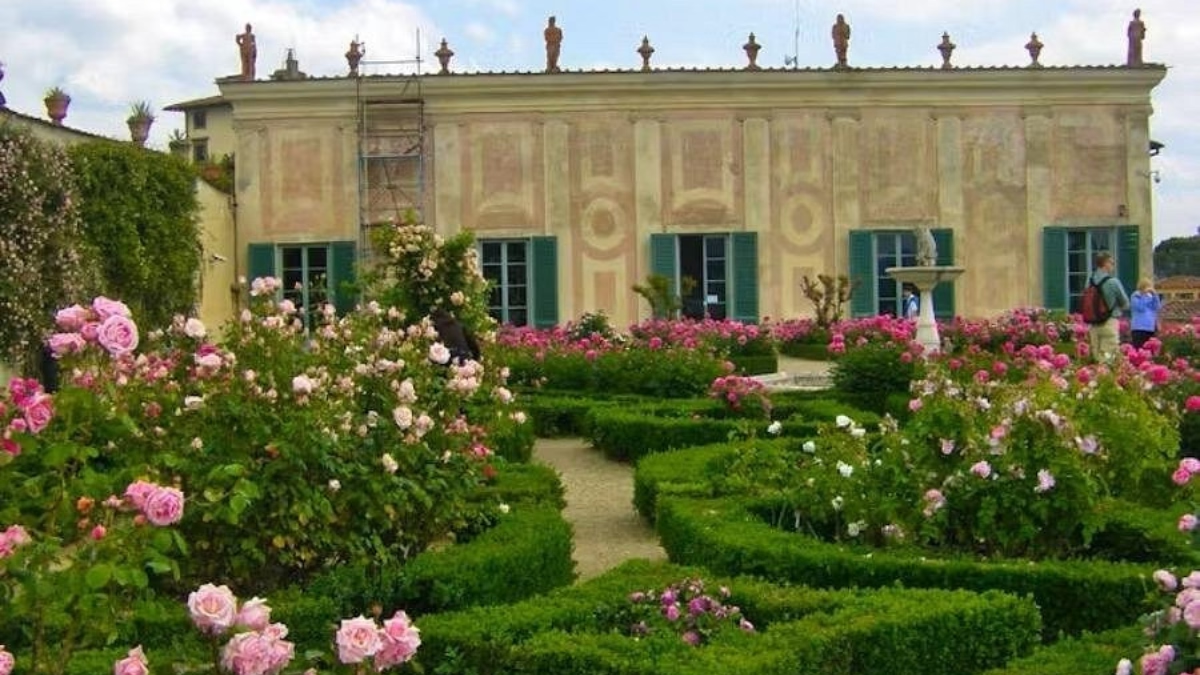
The Porcelain Museum (Museo delle Porcellane) sits at the highest point of Boboli Gardens, inside the small Casino del Cavaliere pavilion. It holds Medici and Lorraine table services in Sèvres, Meissen, Vienna and Doccia porcelain, and it is one of the few indoor spaces in the garden. Entry is included on your Boboli ticket, and the terrace outside gives some of the best views in Florence.
Most visitors climb Boboli for its grottoes, fountains and cypress avenues, but the walk to the very top rewards you with something different: a genuine museum of European porcelain housed in a graceful little pavilion. The Museo delle Porcellane occupies the Casino del Cavaliere, a garden building on the Knight’s Bastion, and it collects the fine china once used by the grand-ducal households of Tuscany.
Because it is one of the only roofed, climate-shaded stops in an otherwise open-air garden, it also makes a natural pause on a hot afternoon. This guide covers what the museum holds, how to find it, when it opens, and why the terrace outside is worth the climb even if porcelain is not your thing.
The Porcelain Museum at a Glance
| Detail | Museo delle Porcellane |
|---|---|
| Location | Casino del Cavaliere, top of Boboli Gardens |
| Collection | Sèvres, Meissen, Vienna and Doccia porcelain |
| Included on | The Boboli Gardens ticket (no separate charge) |
| Opening | Same days as the garden; may close in bad weather |
| Time needed | 20–40 minutes, plus the terrace views |
What the Porcelain Museum Holds
The museum displays the porcelain table services of the Medici, Lorraine and Savoy courts that ruled Tuscany, arranged across three small rooms. You will see French Sèvres, German Meissen, Austrian Vienna and Tuscany’s own Doccia (Ginori) porcelain — dinner services, figurines, biscuit statuettes and painted plates, many made as diplomatic gifts or for the grand-ducal table.
The collection tells the story of European porcelain through the china that actually reached Florence’s ruling houses. One room leans toward the French and Italian pieces, including Sèvres services and the biscuit (unglazed) figures the French factory made famous, alongside work from the nearby Doccia manufactory founded by the Ginori family just outside Florence in 1737 — the Tuscan answer to the great northern workshops.
Other rooms gather the German and Austrian production: Meissen from Saxony, the first factory in Europe to crack the secret of hard-paste porcelain, and Vienna pieces from the Imperial factory. Together they add up to a compact but genuinely fine survey, with painted plates, tureens, figurines and complete dessert services displayed much as they might have appeared on a court table. If the decorative arts interest you, it pairs well with the garden’s outdoor sculpture collection as a study in how the Medici and their successors furnished their world.
The Casino del Cavaliere and Its Views
The museum’s building is part of the appeal. The Casino del Cavaliere is a small 18th-century pavilion set on the Cavaliere (Knight’s) Bastion, a raised terrace at Boboli’s southern crown that was once part of the city’s defensive walls. From the lawn and balustrade outside, the land drops away toward the hills of the Oltrarno, giving a broad, open panorama over vineyards, olive groves and villa gardens rarely captured in the standard Florence postcard.
This is the highest and quietest corner of the garden, well beyond the reach of most day-trippers who turn back at the amphitheater. Reaching it means a steady uphill walk, and the payoff is both the china inside and the calm terrace outside. If you are working out how much of the hill to tackle, our guide on how long to spend at Boboli helps you plan the route to the top.
How to Find It Inside the Garden
The Porcelain Museum sits at the far southern top of Boboli Gardens, above the Cavaliere Bastion and beyond the upper garden known as the Giardino del Cavaliere. From the Pitti Palace entrance, climb past the amphitheater, follow the paths uphill toward the Knight’s Garden, and the Casino del Cavaliere is at the summit — roughly a 15-minute walk from the gate.
Finding it is straightforward if you keep heading up. From the main Pitti Palace courtyard entrance, walk up past the Buontalenti Grotto and the amphitheater, then keep climbing toward the southern boundary. The last stretch passes the walled Giardino del Cavaliere, a small formal rose and peony garden, before reaching the pavilion itself.
The climb is on Boboli’s typical gravel paths with limited shade, so it is easier in the cool of morning or late afternoon. Signage inside the garden is sparse, so a map or the audio app from a reserved entry ticket is useful for staying on the right paths. Coming down, you can loop back via the long cypress-lined Viottolone avenue rather than retracing your steps.
Opening Times and Occasional Closures
The museum keeps the same overall days as Boboli Gardens — open daily except the first and last Monday of each month — but because the Casino del Cavaliere is a small staffed building on an exposed bastion, it can close at short notice for weather, staffing or maintenance. It is not unusual to reach the top and find the doors shut even though the garden is open, so treat the museum as a bonus rather than the sole reason for the climb.
The terrace and its views stay accessible whether or not the pavilion itself is open. For the garden’s full seasonal schedule and the last-admission cut-off, see our opening hours guide, and always confirm on the official Uffizi Galleries site before a special trip to the summit.
Is It Included on Your Ticket?
Yes. The Porcelain Museum is covered by the standard Boboli Gardens ticket at no extra cost, as part of the combined “Boboli, Bardini and Porcelain Museum” circuit. There is no separate admission and no separate line — you simply walk in when the pavilion is open. The same is true if you enter on a combined Pitti Palace and Boboli ticket.
The museum is one of the reasons the Boboli ticket represents decent value: a single admission covers the garden, the Bardini Gardens across the hill and this porcelain collection. In 2026 the garden ticket costs around €10 at the gate or €13 booked online, with under-18s free and the first Sunday of each month free for all. If you also want the palace galleries, a combined Pitti Palace and Boboli ticket folds the museum in alongside Pitti’s indoor collections on one pass.
Frequently Asked Questions
Is the Porcelain Museum included in the Boboli Gardens ticket?
Yes. It is part of the combined circuit covered by the standard Boboli ticket, along with the Bardini Gardens, at no extra charge. In 2026 that ticket is around €10 at the gate or €13 online, with under-18s free. You do not book the museum separately; you simply enter the Casino del Cavaliere when it is open during your visit.
Where is the Porcelain Museum in Boboli Gardens?
It sits at the southern summit of the garden, inside the Casino del Cavaliere pavilion on the Cavaliere Bastion, above the walled Knight’s Garden. From the Pitti Palace entrance it is roughly a 15-minute uphill walk past the amphitheater. It is the highest visitor building in Boboli, which is why the terrace outside has such sweeping views over the Florentine hills.
What porcelain is on display?
The collection covers the table services of Tuscany’s grand-ducal households: French Sèvres, German Meissen, Austrian Vienna and the local Doccia (Ginori) porcelain made just outside Florence. You will see dinner and dessert services, tureens, painted plates, figurines and biscuit statuettes, many produced as court commissions or diplomatic gifts across the 18th and 19th centuries.
How long does a visit take?
Allow about 20 to 40 minutes for the three small rooms of porcelain, plus extra time on the terrace for the views. It is a compact museum, not a sprawling gallery, so it fits easily into a wider garden circuit. Factor in the 15-minute climb from the Pitti entrance when planning where it falls in your route.
Can the Porcelain Museum be closed when the garden is open?
Yes. Because it is a small staffed pavilion on an exposed bastion, it sometimes closes for weather, staffing or maintenance even when Boboli itself is open. The views from the terrace remain accessible regardless. If the museum is the main draw of your visit, check the official Uffizi Galleries site beforehand and keep expectations flexible.
Is the museum worth the climb to the top of Boboli?
For anyone interested in the decorative arts, yes — it is a genuinely fine porcelain collection in an elegant setting. Even if china is not your priority, the Casino del Cavaliere sits at the garden’s quietest, highest point, and the panorama over the Oltrarno hills rewards the walk on its own. Combine both and the climb is easily justified.
Are photographs allowed inside?
Non-flash photography is generally permitted in the display rooms, as in most Uffizi Galleries sites, though rules can change. The porcelain sits in cases, so reflections make good shots tricky. The terrace outside is the more photogenic spot, with open views that are especially good in the softer light of early morning or late afternoon.
Does the audio app cover the Porcelain Museum?
The digital audio app bundled with some Boboli entry tickets focuses mainly on the garden’s outdoor highlights, with lighter coverage of the museum interior. It is still useful for navigating the paths to the summit, since Boboli’s on-site signage is limited. Inside the pavilion, brief labels accompany the main services.
